Jesse Eisenberg Razzie Award Consequences: How Batman v Superman Changed His Hollywood Career
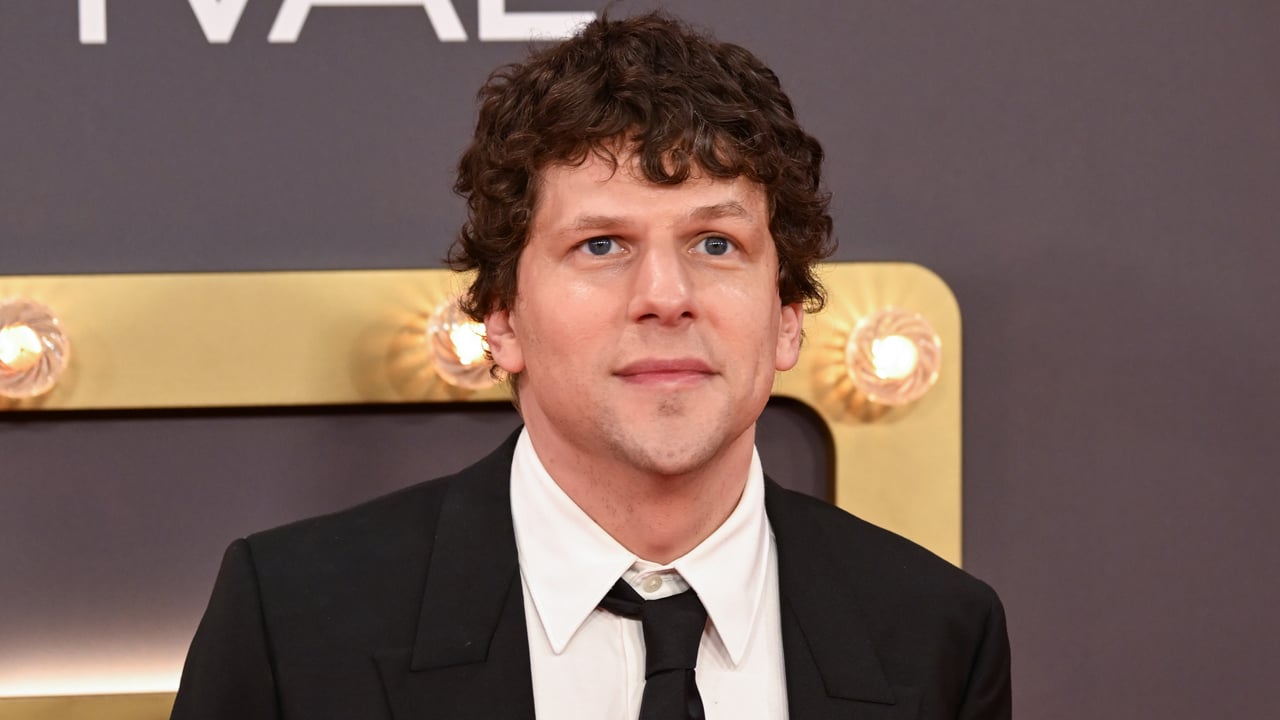
Jesse Eisenberg has revealed that his Golden Raspberry Award for Worst Supporting Actor in Batman v Superman: Dawn of Justice had consequences that extended well beyond an embarrassing Hollywood moment. Speaking at the BFI London Film Festival in October 2026, the actor said the negative reception to his portrayal of Lex Luthor effectively shut him out of major studio productions. The experience pushed him toward writing and directing his own films, transforming what initially appeared to be a professional setback into a turning point in his career.
Eisenberg, who earned an Academy Award nomination for portraying Mark Zuckerberg in The Social Network, played the DC Comics villain in the 2016 superhero film. Although Batman v Superman performed strongly at the global box office, it received mixed-to-negative reviews, and Eisenberg’s performance became particularly divisive. A decade later, he has explained how the criticism and subsequent Razzie recognition influenced his professional decisions.
What Did Jesse Eisenberg Say About His Razzie Award?
Jesse Eisenberg discussed the impact of his Razzie Award during an appearance at the BFI London Film Festival in October 2026. The actor explained that the industry response to his performance in Batman v Superman changed the kinds of opportunities available to him. Rather than treating the award as an isolated joke, he viewed it as a signal that major studios had become reluctant to cast him in large commercial productions.
Eisenberg suggested that the experience taught him how quickly Hollywood can change its perception of an actor. A performer who is considered suitable for a major franchise can suddenly find that similar opportunities have disappeared. His comments reflected frustration with the industry’s tendency to judge actors according to the reception of individual projects.
The actor also acknowledged that he had to reconsider his career rather than continue pursuing roles that were no longer being offered. That realization became an important factor in his decision to develop projects independently, particularly through screenwriting and directing.
Why Did Jesse Eisenberg Win the Worst Supporting Actor Razzie?
Jesse Eisenberg received the Golden Raspberry Award for Worst Supporting Actor for his performance as Lex Luthor in Batman v Superman: Dawn of Justice. The superhero film was released in March 2016 and directed by Zack Snyder, with Ben Affleck portraying Batman and Henry Cavill returning as Superman. Eisenberg played a younger, unconventional version of the famous DC Comics villain.
His interpretation differed considerably from earlier portrayals of Lex Luthor. Instead of presenting the character primarily as a controlled and intimidating businessman, Eisenberg emphasized nervous energy, rapid speech and unpredictable behavior. Some viewers appreciated the unusual approach, but others felt it was inconsistent with their expectations of the character.
The film received eight Razzie nominations and won four awards, including Worst Supporting Actor for Eisenberg. The Golden Raspberry Awards are satirical honors recognizing performances and productions judged negatively by voters. Although the awards are not considered a definitive measure of artistic quality, they can attract substantial publicity and contribute to the reputation of a film.
Did the Razzie Award Stop Jesse Eisenberg From Getting Major Movie Roles?
According to Eisenberg’s comments in October 2026, the Razzie Award and the wider reaction to Batman v Superman affected his access to major studio opportunities. He said he could no longer secure the kinds of large Hollywood productions that had previously seemed possible. The experience suggested to him that the industry no longer considered him a suitable choice for major commercial franchises.
His remarks do not necessarily mean that he stopped receiving acting work altogether. Eisenberg continued appearing in independent films, dramas and other productions after Batman v Superman. However, he distinguished those opportunities from the large-budget studio roles that had become more difficult to obtain.
The difference was significant because franchise films can provide actors with international exposure and long-term professional opportunities. Eisenberg’s experience showed how the reception of a single high-profile performance could influence casting decisions, even for someone who had previously received major awards recognition.
How Did Batman v Superman Change Jesse Eisenberg’s Hollywood Career?
Batman v Superman represented one of the largest commercial productions in Jesse Eisenberg’s career. Before joining the film, he had already established himself through performances in The Squid and the Whale, Zombieland, Adventureland and The Social Network. His casting as Lex Luthor suggested that he could move between independent cinema and major Hollywood franchises.
The film earned more than $870 million worldwide but received considerable criticism for its storytelling, tone and character development. Eisenberg’s performance became part of the broader debate surrounding the movie. While the commercial results demonstrated substantial audience interest, the critical response created a difficult environment for several aspects of the production.
Eisenberg later appeared briefly as Lex Luthor in Justice League and returned through additional footage in Zack Snyder’s Justice League. However, the character did not become the foundation of a continuing major franchise role for him. His subsequent career increasingly emphasized smaller films, original stories and projects in which he had greater creative involvement.
Why Did Jesse Eisenberg Start Writing and Directing Movies?
Jesse Eisenberg explained that his move toward writing and directing was partly motivated by concerns about losing professional relevance. After experiencing difficulties securing major studio roles, he worried that his career could gradually lose momentum. Developing his own projects offered a way to remain active without depending entirely on casting decisions made by large production companies.
The actor had already demonstrated an interest in writing before becoming a feature-film director. He wrote plays, contributed humor pieces to publications and developed original stories outside his acting assignments. Those experiences provided a foundation for his transition into filmmaking.
Directing also allowed Eisenberg to explore subjects that interested him personally, including family relationships, social discomfort, identity and emotional conflict. Rather than pursuing another superhero role simply to restore his commercial profile, he began concentrating on projects that reflected his creative interests. His comments suggest that the decision was both a professional response to rejection and an opportunity to establish greater independence.
What Was Jesse Eisenberg’s First Directorial Film?
Jesse Eisenberg made his feature directorial debut with When You Finish Saving the World, which premiered at the Sundance Film Festival in January 2022. The comedy-drama starred Julianne Moore and Finn Wolfhard as a mother and son struggling to understand each other’s values and priorities. Eisenberg also wrote the screenplay, adapting material from an audio drama he had previously created.
The film explored generational differences, emotional distance and the desire for personal recognition. Its story centered on Evelyn, a woman working at a domestic violence shelter, and her teenage son Ziggy, who seeks attention through his online music performances. Their conflicting perspectives created both uncomfortable comedy and moments of emotional tension.
Although the film did not achieve blockbuster-level commercial success, it established Eisenberg as a filmmaker interested in character-driven stories. It also demonstrated that he could take responsibility for a production beyond his work as an actor. The experience helped prepare him for his next major directing project.
How Did A Real Pain Change Jesse Eisenberg’s Career?
A Real Pain became an important achievement in Jesse Eisenberg’s career as a writer and director. The 2024 comedy-drama followed two American cousins traveling through Poland to honor their late grandmother and explore their family history. Eisenberg wrote, directed and starred in the film alongside Kieran Culkin.
The story combined humor with serious themes involving grief, inherited trauma, family relationships and the legacy of the Holocaust. Eisenberg portrayed David, a reserved and anxious man, while Culkin played his outspoken cousin Benji. Their contrasting personalities created much of the film’s emotional tension.
The film received widespread critical recognition and earned two Academy Award nominations. Culkin won the Oscar for Best Supporting Actor, while Eisenberg received a nomination for Best Original Screenplay. The success demonstrated that his work behind the camera could achieve major awards recognition without relying on a large commercial franchise.
For Eisenberg, A Real Pain also represented a form of professional reinvention. The project allowed him to establish a distinctive creative identity while continuing to act. Its reception showed that independent filmmaking could provide opportunities for recognition comparable to those available through major studio productions.
What Is Jesse Eisenberg’s Film The Debut About?
Eisenberg’s comments at the BFI London Film Festival also brought attention to his continuing work as a filmmaker. His developing projects have been discussed as part of his broader transition from an actor primarily associated with studio and independent performances to a writer-director creating original material.
The title The Debut has appeared in discussions of his filmmaking plans, although detailed production information and a confirmed release schedule have not been clearly established. Without reliable confirmation, it would be premature to describe the project as a completed feature or provide specific plot details.
What is established is that Eisenberg has continued pursuing filmmaking after the recognition received by A Real Pain. His directing career reflects an interest in personal storytelling and projects developed outside the conventional superhero franchise system.
Did Jesse Eisenberg Regret Playing Lex Luthor?
Jesse Eisenberg has spoken openly about the difficult reception to his portrayal of Lex Luthor, but his comments do not necessarily mean that he regrets accepting the role. The actor has distinguished the experience of working on the film from the professional consequences that followed its release. His concerns have focused particularly on how the criticism affected future opportunities.
Playing Lex Luthor was a major assignment in a highly anticipated DC Comics production. The role placed Eisenberg alongside prominent actors and introduced his work to a global superhero audience. However, the character’s unconventional interpretation became one of the film’s most debated elements.
Looking back, Eisenberg has suggested that the experience taught him to recognize when Hollywood was no longer offering a particular kind of opportunity. Rather than repeatedly pursuing similar franchise roles, he redirected his attention toward work he could develop himself. His response was less about rejecting superhero films entirely and more about adapting to the opportunities available.
Why Was Jesse Eisenberg’s Lex Luthor So Controversial?
Lex Luthor is traditionally portrayed as one of Superman’s most intelligent and dangerous enemies. In many comics and earlier screen adaptations, he is a wealthy businessman whose calculated personality makes him a formidable opponent. Eisenberg’s version departed from that familiar interpretation by emphasizing eccentric behavior and emotional instability.
The character’s nervous movements, unusual speech patterns and unpredictable reactions became frequent subjects of criticism. Some viewers felt the portrayal lacked the authority associated with Lex Luthor, while others believed the film was attempting a modern reinterpretation of the villain. The divided response contributed to broader disagreements about the creative direction of the DC Extended Universe.
Eisenberg’s performance was also shaped by the screenplay and the film’s overall characterization of Lex Luthor. Evaluating the result solely as an individual acting decision overlooks the collaborative nature of filmmaking. Nevertheless, the public response became closely associated with Eisenberg himself, contributing to the professional consequences he later described.
What Other Movies Has Jesse Eisenberg Appeared In?
Jesse Eisenberg built his reputation through independent films and character-driven performances before joining the DC superhero franchise. His early credits included The Squid and the Whale, Adventureland and Zombieland, all of which helped establish his distinctive acting style. He became particularly recognized for portraying intelligent, socially uncomfortable and emotionally complex characters.
His performance as Facebook co-founder Mark Zuckerberg in David Fincher’s The Social Network became a major career milestone. The 2010 film received widespread critical acclaim, and Eisenberg earned an Academy Award nomination for Best Actor. The role established him as one of the most prominent actors of his generation.
He later appeared in Now You See Me, The Double, American Ultra, The Art of Self-Defense and other productions. His career continued after Batman v Superman, even as he moved toward projects with smaller budgets and greater creative freedom. This distinction is important because his reported difficulties involved major studio opportunities rather than a complete absence of acting work.
What Did Jesse Eisenberg Learn From His Career Setback?
Eisenberg’s experience illustrates the uncertainty that can accompany a career in Hollywood. Even actors with major awards recognition can find that a poorly received performance changes the kinds of roles they are offered. In his case, the Razzie Award became associated with a wider shift in how the industry viewed his commercial appeal.
Instead of waiting for another large studio opportunity, Eisenberg increasingly relied on his own writing and filmmaking. This approach gave him greater control over the stories he wanted to tell and reduced his dependence on decisions made by franchise producers. His work on A Real Pain demonstrated that the change could lead to substantial artistic recognition.
The actor’s comments also highlighted the difference between public perception and professional ability. A performance criticized in one genre does not necessarily determine an actor’s potential in another. Eisenberg’s success as a writer and director showed how a difficult professional experience could encourage a different creative direction.
What Is Jesse Eisenberg Doing Now?
Jesse Eisenberg continues working as an actor, screenwriter and director, with his filmmaking career receiving increased attention following A Real Pain. His October 2026 appearance at the BFI London Film Festival offered an opportunity to reflect on how his career had changed since Batman v Superman. The discussion connected his earlier experience in a major superhero production with his subsequent success in independent filmmaking.
His professional path now includes both acting assignments and original projects developed through his own creative work. Rather than depending exclusively on studio casting decisions, Eisenberg has established himself as a filmmaker capable of developing stories from the writing stage through production. That independence has become an important part of his career.
Jesse Eisenberg’s Razzie Award for Batman v Superman remains one of the most publicly discussed setbacks of his acting career, but it did not bring his professional work to an end. His account of losing major studio opportunities explains why he began placing greater emphasis on writing and directing. With A Real Pain earning significant recognition, the experience that once threatened his Hollywood prospects ultimately became part of a broader creative reinvention.