Tesla Roadster Flying Car: Can Elon Musk’s New SpaceX-Powered Electric Supercar Really Fly?
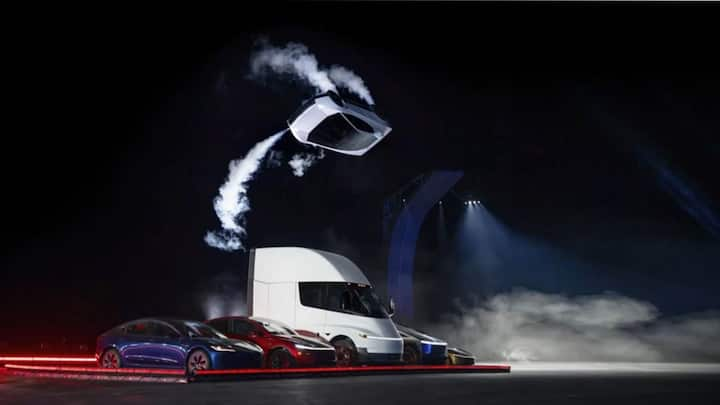
Tesla has reportedly demonstrated an experimental version of its long-awaited Roadster electric sports car capable of performing short airborne movements using rocket-inspired technology developed with SpaceX. The October 15, 2026, demonstration at a SpaceX testing facility in McGregor, Texas, reportedly featured controlled hops, aerial rotations and extreme acceleration, offering a glimpse of what Elon Musk has described as a new direction for high-performance electric vehicles.
The redesigned Roadster has faced years of delays since its original unveiling in 2017. Tesla is now reportedly targeting production in 2028, with an experimental rocket-equipped configuration designed to push the limits of conventional sports cars. However, the vehicle’s reported flight capabilities remain experimental, and questions about safety, road legality and commercial production have yet to be resolved.
How Did Tesla Demonstrate the Flying Roadster?
Tesla unveiled the redesigned Roadster at SpaceX’s testing facility in McGregor, Texas, nearly nine years after the second-generation electric sports car was first introduced.
The demonstration included several unusual driving manoeuvres that combined advanced aerodynamics with compressed-air propulsion.
During one sequence, the Roadster climbed a specially designed curved ramp and continued travelling almost upside down. Its underbody suction system helped maintain contact with the surface despite the extreme angle.
The vehicle then separated from the ramp, using its thrusters to control its descent before landing on the ground.
Another demonstration showed the Roadster launching into the air and passing over a line of parked Tesla vehicles, including a Cybercab and Tesla Semi. The prototype rotated while airborne before returning to the ground.
Tesla also demonstrated the car’s ability to perform aerial flips, something normally associated with stunt aircraft rather than electric sports cars.
The demonstrations were conducted autonomously under controlled conditions, without a human driver inside the vehicle.
Following the event, Musk shared footage of the Roadster’s unusual movements on social media, attracting widespread attention from automotive enthusiasts and technology observers.
The display highlighted the difference between Tesla’s experimental prototype and a conventional electric sports car. However, the short airborne movements do not mean the Roadster can operate as a practical flying vehicle over long distances.
How Does Tesla Roadster’s SpaceX Thruster Technology Work?
The redesigned Roadster uses a propulsion system developed with SpaceX that relies on compressed gas rather than conventional rocket combustion.
The technology stores highly pressurised air in specialised tanks and releases it through strategically positioned thrusters to generate force.
Unlike a traditional electric vehicle, which depends on tyre traction for acceleration and braking, the rocket-equipped Roadster can use additional thrust to influence its movement.
Tesla demonstrated how the system can provide upward lift, help control the vehicle’s orientation while airborne and assist with high-speed acceleration.
The prototype reportedly uses two carbon-fibre-wrapped pressure vessels with a combined capacity of approximately 600 litres. The system includes ten thruster nozzles positioned around the vehicle.
Another important feature is its underbody suction system. Powered fans draw air from beneath the car, creating low pressure that increases the force holding the tyres against the road.
This technology helps the Roadster generate additional grip, particularly during aggressive cornering and unusual manoeuvres.
The vehicle also features active aerodynamics, allowing different body components to adjust airflow depending on driving conditions.
The combination of electric propulsion, compressed-air thrusters and advanced aerodynamic systems is what makes the new Roadster different from existing high-performance electric cars. Rather than relying entirely on conventional mechanical grip, the prototype uses additional technology to control how it accelerates, corners and moves through the air.
However, these systems introduce engineering challenges involving weight, energy consumption, pressure management and passenger safety.
How Fast Is the New Tesla Roadster?
Tesla claims its redesigned Roadster can accelerate from 0 to 60 mph in less than one second when equipped with its advanced thruster system.
During the unveiling, the company demonstrated a reported acceleration time of approximately 0.81 seconds, an extraordinary figure compared with conventional production sports cars.
The company has also indicated that the Roadster could exceed 230 mph, equivalent to approximately 370 km/h.
These figures would place the vehicle among the fastest-accelerating cars ever demonstrated, although independent testing of a production model has not yet established its real-world capabilities.
The extreme acceleration relies partly on the additional force generated by its compressed-air propulsion system.
Tesla has also discussed different Roadster configurations, including Performance, Thrust and a more specialised Rocket version.
The Rocket configuration is expected to prioritise maximum performance and experimental capabilities, potentially using a single-seat layout rather than the conventional two-seat arrangement.
The redesigned Roadster’s final battery specifications, charging capabilities and production pricing have not been fully established.
Earlier versions of the project promised exceptionally long driving range, but the specifications announced during the latest unveiling differ from those originally discussed in 2017.
For potential buyers, the most important question will be whether Tesla can translate the prototype’s performance into a reliable and commercially available vehicle.
When Will the Tesla Roadster Launch and Can It Legally Fly?
Tesla is now targeting 2028 for production of the redesigned Roadster, although the project has already experienced several significant delays.
The second-generation model was originally unveiled in November 2017, with production initially expected around 2020.
Over the following years, the launch schedule was repeatedly postponed as Tesla concentrated on other vehicle programmes, manufacturing expansion and autonomous driving technology.
The latest demonstration represents an important development because it shows a working prototype performing capabilities that Musk has discussed for several years.
However, there is still a difference between demonstrating experimental technology and producing a vehicle that customers can legally operate.
The Roadster’s airborne capabilities have not received general approval for use on public roads. Regulatory authorities would need to evaluate safety, vehicle classification and operational restrictions before such features could become commercially practical.
Musk has acknowledged that some configurations may not be legal in every jurisdiction.
The specialised Rocket version could face particularly strict limitations because its extreme acceleration and airborne manoeuvres go beyond the normal operating conditions of passenger vehicles.
Tesla has not established that customers will be permitted to perform these demonstrations on ordinary roads.
For now, the Roadster remains a high-performance electric sports car project with experimental flight-like capabilities rather than a replacement for conventional aircraft.
Its commercial success will depend on production readiness, safety testing, regulatory approval and whether Tesla can deliver the promised technology at a practical cost.
The latest Roadster demonstration has renewed excitement around a vehicle that has been anticipated for nearly a decade. Its ability to perform short airborne manoeuvres and achieve extraordinary acceleration shows how Tesla and SpaceX are exploring new possibilities in automotive engineering. Whether these experimental features eventually become available to everyday drivers remains uncertain, but the unveiling has given the long-delayed Roadster a new place in the discussion about the future of electric performance cars.